2027 · Copenhagen · Denmark
COPMUN — the Copenhagen Model United Nations — is a student-led simulation of UN proceedings, bringing together young delegates from international schools in Copenhagen.
Students step into the shoes of UN representatives, debating pressing global challenges, drafting resolutions, and building the diplomatic skills essential for global citizenship. Organised by LFPH, with the participation of ISH, CIS and ESC, four of Copenhagen's leading international schools.
Copenhagen — København — is one of Europe's most cosmopolitan capitals and a natural backdrop for a Model UN conference. Denmark has been a UN member since 1945 and consistently ranks among the world's top performers in democracy, human development, and press freedom.
The city hosts numerous international organisations and embassies, forming a thriving diplomatic ecosystem — making it the perfect home for COPMUN.
Founding UN member since 1945. Active in peacekeeping, climate action, and humanitarian aid.
Home to Nordic diplomatic institutions and UN agencies, fostering global engagement.
Repeatedly ranked the world's most liveable and sustainable city, embodying SDG values.
A thriving international school community fostering intercultural exchange across cultures.
COPMUN is organised by LFPH and welcomes delegates from three other distinguished Copenhagen schools, united in a shared commitment to global citizenship and international education.
An Agence pour l'Enseignement Français à l'Étranger (AEFE) accredited school offering the French national curriculum — from nursery through to the Baccalauréat — to French and international families in Copenhagen.
LFPH combines rigorous academic excellence with deep European values of dialogue, cultural exchange, and civic engagement. Its multilingual students bring a distinctly French intellectual tradition to COPMUN's debates.
A fully authorised International Baccalaureate (IB) world school in Hellerup, Copenhagen, offering the Middle Years Program (MYP) and IB Diploma to students from around the globe.
ISH cultivates critical thinking, intercultural understanding, and a genuine spirit of inquiry — values that make it a natural partner for a conference dedicated to international diplomacy and problem-solving.
An International Baccalaureate (IB) world school in Nordhavn, Copenhagen, welcoming students from around the globe and offering the Primary Years, Middle Years and Diploma programmes.
CIS brings a truly international community of students to COPMUN, encouraging open-minded, collaborative debate on the challenges facing our world.
An Accredited European School in the Carlsberg district of Copenhagen, offering a multilingual and multicultural education from nursery through to the European Baccalaureate.
ESC brings a strong European outlook and a tradition of language learning to COPMUN, enriching the debates with perspectives from its diverse student community.
On Wednesday, 14 April 2027, Prins Henrik Skole opens its doors to delegates from LFPH, ISH, CIS and ESC for a full day of debate on four of the world's most urgent global challenges.
Tap a committee to read the full topic and description.
The Strait of Hormuz is one of the world's most important shipping lanes, carrying a large share of global oil and gas exports. Disruptions to traffic there ripple far beyond the Gulf, pushing up food and fuel prices worldwide. Delegates will examine freedom of navigation, the security of maritime trade routes and the responsibilities of regional and global powers, while seeking solutions the Council can realistically enforce.
Rising seas are an existential threat for low-lying island states and coastal cities alike. This committee will address how to finance adaptation, protect displaced communities, and safeguard the rights of nations whose territory and maritime boundaries are at risk. Delegates must balance climate justice, national sovereignty and the limits of what international law currently provides.
The COVID-19 pandemic exposed deep gaps in early warning, data sharing, vaccine access and public trust. Delegates will debate how to build a fairer and more resilient global health architecture: sustainable financing, transparent cooperation between states, and the role of the WHO in coordinating the next international response.
Generative AI can now produce convincing fake images, voices and videos in seconds, threatening elections, public debate and trust in information itself. Delegates will explore how to govern deepfakes and disinformation through international standards, platform accountability and digital literacy, without stifling innovation or freedom of expression, and while addressing the gap between technologically advanced and developing states.
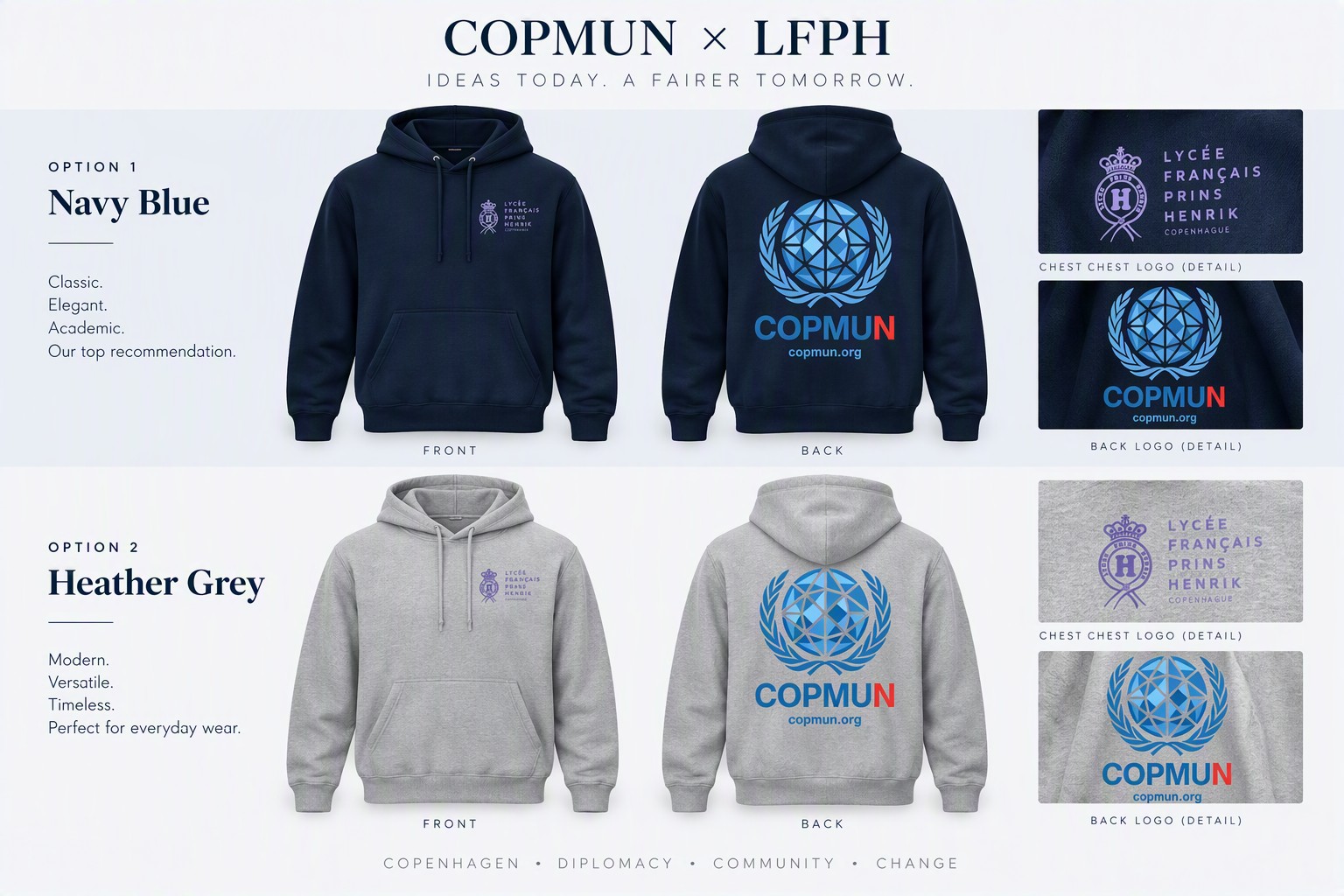
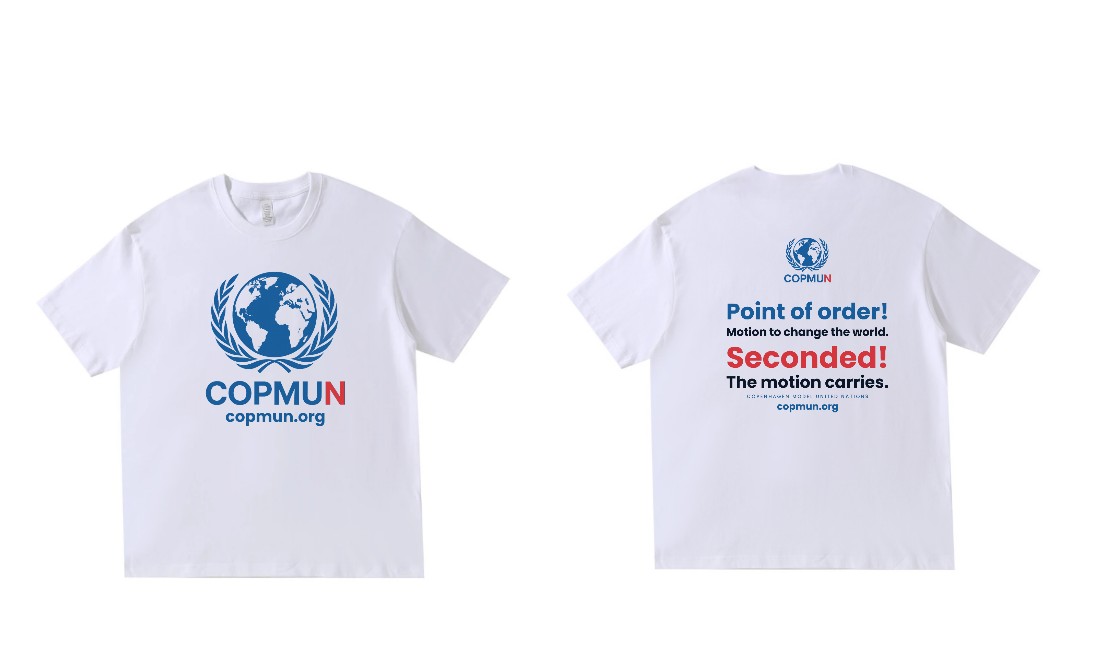
Take a piece of COPMUN 2027 home with you. Our official merchandise is available to delegates, chairs and organisers from all four schools.